
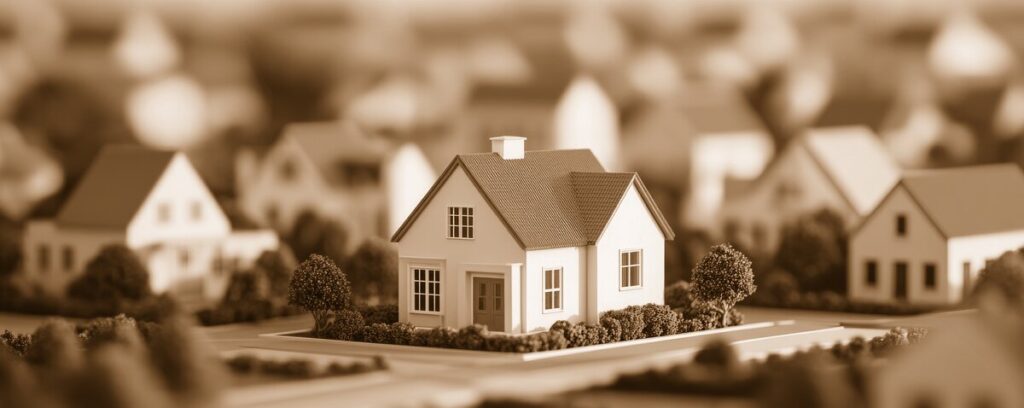
A Neighborhood with a Quiet Identity
Highwoods is one of those Franklin Lakes neighborhoods whose character is easy to recognize, even if its history is not marked by a single founding date or village green. Centered around Highwoods Drive and connected to streets such as Apple Ridge Road, Arapaho Trail, Hemlock Court, and nearby woodland lanes, the neighborhood feels like a natural extension of the borough’s larger story: a rural landscape gradually becoming a welcoming suburban community.
The name itself captures much of the appeal. “Highwoods” suggests elevated ground covered in trees, and that is still the impression many visitors have when they travel through the area. The neighborhood’s identity grew out of Franklin Lakes’ wooded hills, former farms, and carefully planned residential development rather than from one famous historic event. In that sense, Highwoods is best understood as a modern neighborhood layered over a much older landscape.
Before Highwoods: Lenape Paths and Colonial Farms
Long before the first modern homes appeared, the land that became Franklin Lakes was traveled by Lenape people. The borough’s own historical account notes that Lenape families used the area seasonally, including the “Clove” near Buttermilk Falls and the waters now known as Franklin Lake. Dutch settlers followed in the early eighteenth century, establishing farms, mills, and family homesteads across the hills and valleys.
By the 1700s and 1800s, the broader Franklin Lakes area was a farming community. Families with names such as Ackerman, Pulis, Van Winkle, and Van Houten cultivated the land, raised livestock, and operated small businesses. Streams powered sawmills, gristmills, tanneries, and forges, while the lakes served both practical and recreational purposes.
That agricultural past remains visible in the historic homes and roads surrounding Highwoods. The Ackerman-Boyd House on Franklin Lake Road dates to the late eighteenth century and is associated with the early settlement and farming history of Bergen County. The borough describes it as one of the important surviving reminders of the farms that once covered the area.
How Highwoods Got Its Name
Unlike Campgaw, Crystal Lake, or Pulis Mills, Highwoods does not appear to have begun as an independent nineteenth-century hamlet. It is more likely a later residential name, reflecting the wooded and elevated setting of the neighborhood.
That interpretation fits the pattern of Franklin Lakes development after World War II. As farms and large rural parcels were divided into residential lots, developers and residents adopted names that emphasized landscape and atmosphere. “Highwoods” conveyed privacy, trees, and gently rising terrain—qualities that helped distinguish the neighborhood from denser suburban communities elsewhere in Bergen County.
The spelling also appears in two forms in local records: the borough’s street listings use “Highwoods Drive,” while some property references use “High Woods Drive.” The official municipal road records connect Highwoods Drive with Apple Ridge Road and Arapaho Trail, confirming the street as a recognizable part of the borough’s residential network.
Even if there is no single document announcing the neighborhood’s creation, its name has endured because it accurately describes the feeling of the place.
The Suburban Era Takes Shape
Franklin Lakes changed dramatically during the twentieth century. The borough separated from Franklin Township and incorporated in 1922, but for decades it retained much of its rural character. The town’s population and development began accelerating after improved transportation made northern Bergen County more accessible.
A major milestone came in 1959, when Route 208 was extended to Oakland. The roadway helped connect Franklin Lakes with employment centers and shopping districts across the region. Later, the completion of Interstate 287 in the early 1990s encouraged another wave of construction and made the borough increasingly attractive to commuters.
Highwoods belongs largely to this postwar and late-twentieth-century transformation. Homes were built on former fields and wooded parcels, but the neighborhood’s layout preserved a sense of spaciousness. Streets curve with the terrain rather than forming a strict grid, and mature trees soften the transition between homes and undeveloped land.
The result is a neighborhood that feels established without being old-fashioned. Many houses have been renovated, expanded, or replaced over the decades, yet the original setting remains one of Highwoods’ defining features.
Streets That Tell the Story
A walk or drive through Highwoods reveals how neighborhood planning and natural geography work together.
- Highwoods Drive serves as the community’s central spine and links the neighborhood to Apple Ridge Road.
- Apple Ridge Road helps connect Highwoods with nearby residential sections and provides a useful sense of the area’s rolling landscape.
- Arapaho Trail and its surrounding streets reflect the era when Franklin Lakes subdivisions often used nature-inspired or Native American-themed names.
- Hemlock Court and other smaller lanes show how later additions were fitted into the existing wooded terrain rather than imposed on a straight urban pattern.
These streets are not historic in the same way as Franklin Lake Road or Pulis Avenue, but they are part of the borough’s living history. Their names and alignments preserve the memory of a place that was once more heavily forested, more rural, and less densely settled.
Nearby Landmarks and Community Heritage
Highwoods residents are close to several places that help explain Franklin Lakes’ past. Along Franklin Lake Road, the Ackerman-Boyd House stands as a reminder of the borough’s colonial and agricultural beginnings. Farther north, the historic Pulis homes on Pulis Avenue reflect the importance of the Pulis family, who were early settlers, farmers, and millers in the Franklin Lake area. The borough identifies the William W. Pulis House, built in 1837, as a significant surviving example of mid-nineteenth-century local architecture.
The neighborhood also benefits from Franklin Lakes’ continuing commitment to open space. In 2006, the borough purchased approximately 130 acres of land and water formerly used as a reservoir. That property became the Franklin Lakes Nature Preserve, now known as the G. Thomas Donch Nature Preserve. It represents a modern milestone in the community’s history: the decision to protect natural land even as development pressures increased.
For Highwoods residents, parks and preserves are more than amenities. They help maintain the wooded character that gives the neighborhood its name and connect present-day families with the landscape known by earlier generations.
Highwoods Today
Today, Highwoods is a mature residential neighborhood shaped by continuity. Children walk and bike along familiar streets, neighbors recognize one another at borough events, and long-established trees frame houses that have changed hands across generations.
The neighborhood has evolved from the surrounding rural landscape, but it has not lost its connection to it. Its heritage is found in the quiet clues: a winding road that follows an old slope, a preserved farmhouse along Franklin Lake Road, a stand of trees left intact during construction, or the easy walk to open space.
That is what makes Highwoods special. It is not simply a collection of houses built during suburban expansion. It is a place where Franklin Lakes’ oldest themes—woodland, water, family, and land—remain visible in everyday life. For longtime residents, the neighborhood feels comfortable because it has grown without erasing the natural setting that first gave it character.